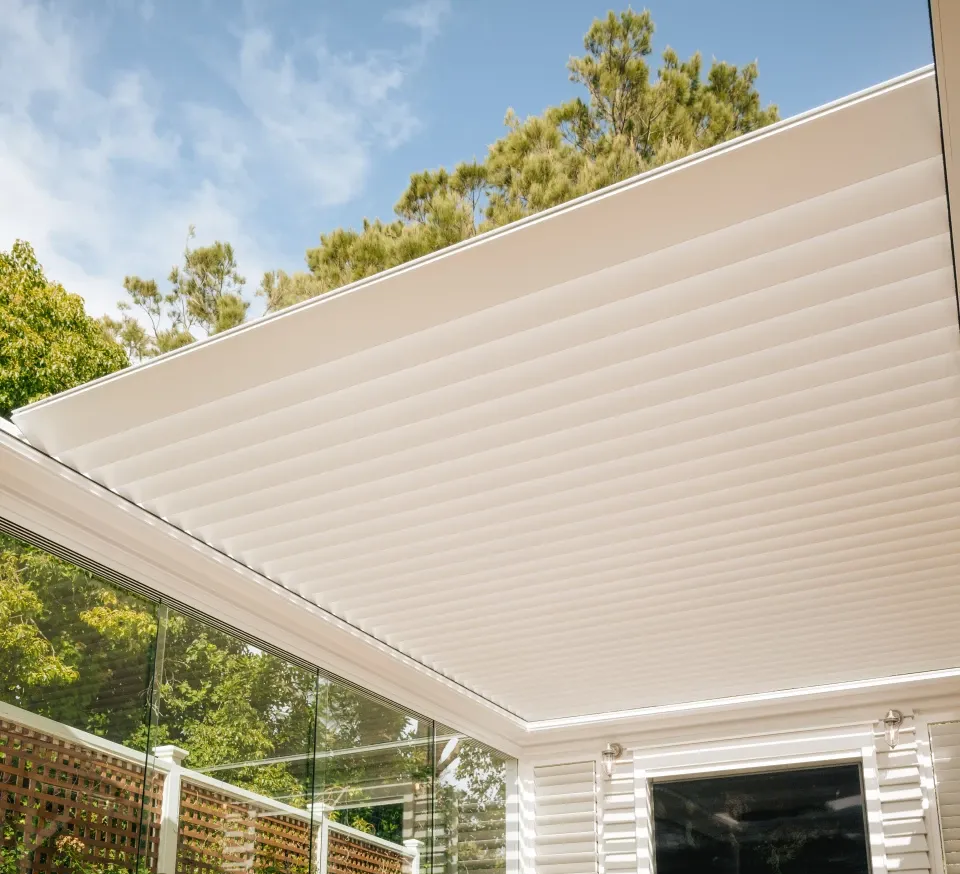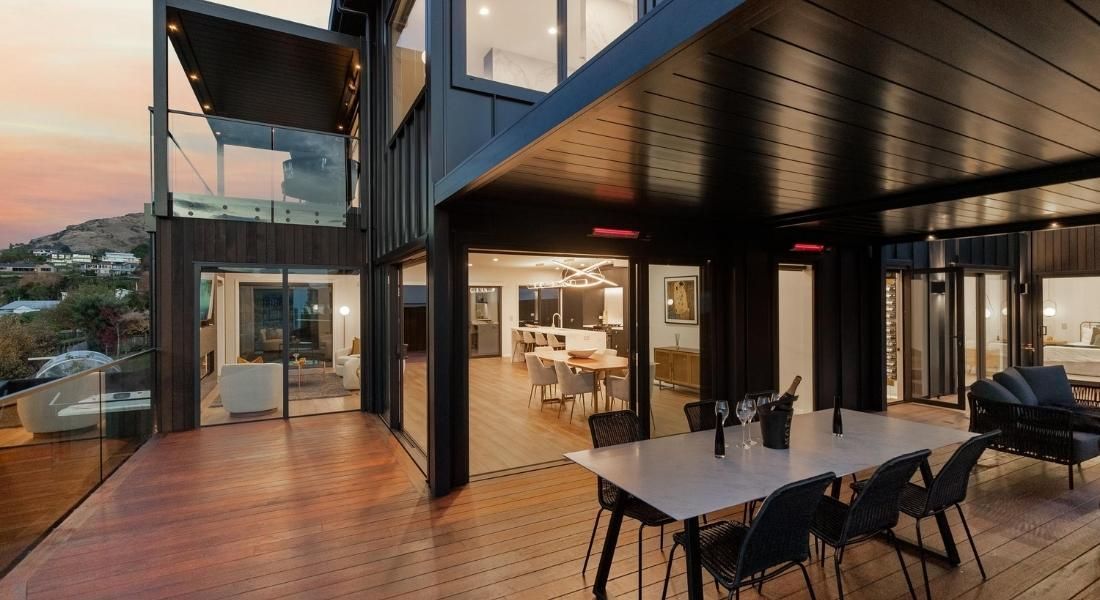

Why louvre roofs are a great fit for coastal Wellington homes
A smarter outdoor cover for coastal wind and weather
Wellington’s coastal homes often feel the full force of the elements, with strong winds, sideways rain and salty air rolling in quickly even when the day starts calm. Outdoor areas can look great, but they are not always easy to use when the weather shifts or the breeze picks up.
Louvre roofs are a practical option for coastal Wellington living because they give you control. You can adjust the louvres to manage light and airflow, then close them when you need more shelter from wind and rain. This post breaks down the key reasons louvres work so well for coastal homes around Wellington, and how they help make outdoor spaces more usable across more days of the year.
What we'll cover
What makes outdoor cover difficult
A look at why strong winds, angled rain and salty air can make outdoor spaces harder to use in Wellington’s coastal areas.
What a louvre roof lets you do
How adjustable louvres give you more flexibility over sun, shade, airflow and shelter as conditions change.
Wind protection and rain management
Why side protection can help make an exposed outdoor area feel calmer and more enjoyable to use. As well as the advantages of hidden drainage.
FAQs
Answers to some commonly asked questions.
Coastal Wellington weather
What makes outdoor cover tricky
Coastal Wellington weather can make outdoor cover more complicated than it first seems. The wind is often strong and can change direction quickly, which means a space that feels sheltered at one point in the day can soon feel exposed. Rain can be just as challenging, especially when it arrives with the wind and blows in at an angle rather than falling straight down.
Salt air adds another consideration for homes near the coast, creating a harsher environment for outdoor spaces over time. That is why outdoor cover in Wellington needs to do more than provide shade on sunny days. It needs to respond well to changing conditions and help make the space feel more usable when the weather is less predictable.
One of the key reasons louvre roofs work so well in coastal Wellington is that they can adapt to the conditions around you. Instead of providing one fixed level of cover, they give you more control over how your outdoor space feels throughout the day.
Why our louvre roofs suit coastal
Adjust for sun, shade and airflow
Adjustable louvres let you respond to changing conditions as they happen. You can open them for more light and airflow, or angle them to create a more comfortable balance of sun and shade depending on the time of day.
Durable powder coat
Our louvre roofs are crafted using powder-coated aluminium, a material chosen for its exceptional resistance to rust, corrosion, and weather-related wear.
Wind-rated construction
Our louvre roofs are specifically designed to withstand Wellington’s high-wind conditions. Constructed with high-grade, powder-coated aluminium and reinforced for stability, they are engineered to endure strong gusts without compromising their integrity.
More comfort on breezy days
That flexibility is especially useful in Wellington, where breezy conditions can move through quickly. Angling the louvres can help the space feel more comfortable without closing everything off completely, which is useful when you still want light and airflow.
Close over when rain moves in
When the rain starts, the louvres can be closed to provide more protection overhead. This helps the space stay more usable in changeable weather, rather than becoming somewhere you avoid as soon as the conditions turn.
It is not just covered, it is controllable
That is what makes a louvre roof such a practical option for coastal homes. It is not only about adding cover above your outdoor area. It is about creating a space that can respond to changing weather and feel more usable across more days of the year.
Practical additions for coastal homes
Wind protections & rain management
Wind protection
A louvre roof helps protect the space from above, but in coastal Wellington, wind can still move through an open patio or deck from the sides. That is why overhead cover is only part of the solution. To make the area feel more comfortable and usable in exposed conditions, it often helps to pair the roof with side protection that reduces wind while still keeping the space open and connected to the outdoors.
Outdoor blinds
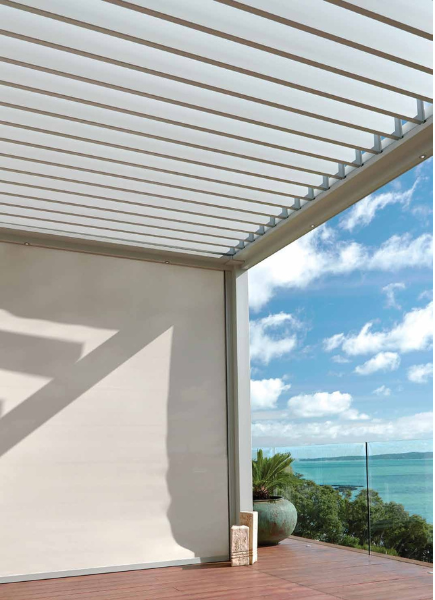
Outdoor blinds are a practical way to reduce wind exposure without fully closing the space in. They help create a more sheltered area while still keeping the outdoor feel, which makes them a good option for patios and decks that need extra protection from Wellington’s breezy conditions. They can also help the space feel more comfortable for dining, relaxing and year-round use.
Glass sliding doors
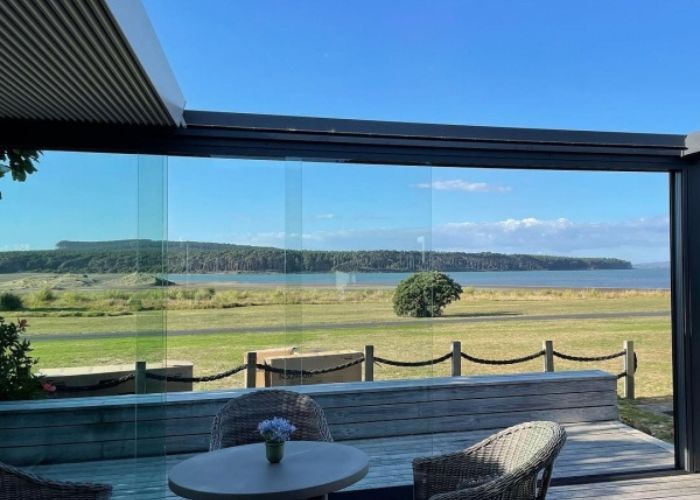
Glass sliding doors offer a more enclosed form of wind protection while still maintaining light and visibility. They are a good option for homeowners who want to create a more protected outdoor room without losing the connection to the view. In coastal areas, they can make a big difference to comfort by helping block strong gusts and making the space feel calmer and easier to use in changing weather.
Rain management
Rain protection matters even more in a place like Wellington, where wind often pushes rain in at an angle rather than letting it fall straight down. A louvre roof helps provide cover from above, but the way water is collected and directed also plays a big part in how usable the space feels when the weather turns.
Integrated guttering
Integrated guttering helps collect rainwater neatly and direct it away, rather than letting it run off in a less controlled way. This can help reduce drip lines around the edges of the roof and keep the area underneath feeling tidier and more comfortable to use in wet weather.
Hidden downpipes
Hidden downpipes carry that water away while keeping the structure looking clean and uncluttered. Instead of visible pipework interrupting the posts, the drainage is concealed within the design, which helps the louvre roof maintain a more architectural finish. Making a noticeable difference to both the appearance of the structure and the overall feel of the outdoor space.
Rain sensors
You can choose to adda built-in rain sensor that automatically detects rainfall and closes the louvres, offering hands-free protection.
Outdoor space solution for coastal homes
For coastal Wellington homes, outdoor cover needs to do more than provide shade on fine days. It needs to handle wind, rain and changing conditions in a way that helps the space feel more comfortable and usable throughout the year. That is where louvre roofs work so well. Their adjustable design gives you more control over light, airflow and shelter, while options like outdoor blinds, glass sliding doors, integrated guttering and hidden downpipes help create a space that feels practical and well finished. When these elements are planned together, the result is an outdoor area that feels more comfortable, more functional and easier to enjoy in a wider range of weather.
Considering a louvre for your space?
Get in touch with us today to explore the best options for your home.
FAQs
Are louvres suitable for Wellington weather?
Yes. Louvres are designed for changeable conditions because you can adjust them for sun and airflow, then close them for overhead cover when the weather shifts.
Can louvre roofs help in coastal areas?
They can. Coastal homes often deal with wind, rain and salt air, so having an outdoor cover that can adapt to changing conditions makes the space more practical to use.
Do louvre roofs protect against rain?
Yes, when closed, louvre roofs provide overhead cover from rain. Features like integrated guttering and hidden downpipes also help manage water neatly and direct it away from the space.
Why do hidden downpipes matter?
Hidden downpipes help carry water away without adding visible pipework to the structure. This keeps the posts looking cleaner and helps the louvre roof maintain a more architectural finish.
Find out more about our louvre roof options here.
Want to create the perfect outdoor living space?
Explore our product range: